Sixteen stadiums across three countries have 85 days to prove they can host the largest FIFA World Cup in history. The clock started ticking on March 18 when the U.S. Department of Homeland Security finally released $625 million in frozen security grants to 11 American host cities, ending a month-long standoff that nearly derailed fan festivals in Miami and Kansas City.
The 2026 tournament, the first to feature 48 teams playing 104 matches, has no margin left for delay.
The Five Weeks That Shook the Tournament
The freeze began on February 14 when a partial government shutdown halted disbursements from the FIFA World Cup Grant Program. For five weeks, cities that had already committed hundreds of millions in local funds were left without the federal security money they had been promised.
Ray Martinez, chief operating officer of the Miami Host Committee, called the situation "catastrophic" for coordination efforts. Joseph Mabin, deputy chief of Kansas City Police, testified that local departments could not meet safety requirements on their own budgets.
What $625 Million Buys — and What It Does Not
The federal package covers security staffing and $250 million in anti-drone technology. It does not cover stadium renovations, transportation upgrades, or the temporary overlay construction that transforms football stadiums into FIFA-compliant venues.
Those costs fall entirely on host cities and stadium owners.
That revenue gap has drawn sharp criticism. Independent analysts have called the city hosting agreements the "worst deal in history," noting that FIFA collects record revenue while municipalities absorb the full weight of security and infrastructure spending.
Congresswoman Nellie Pou, ranking member of the House Homeland Security Task Force, framed the stakes plainly: "If Washington doesn't get its act together, we risk turning a generational opportunity into an international embarrassment."
The Stadium Problem Nobody Planned For
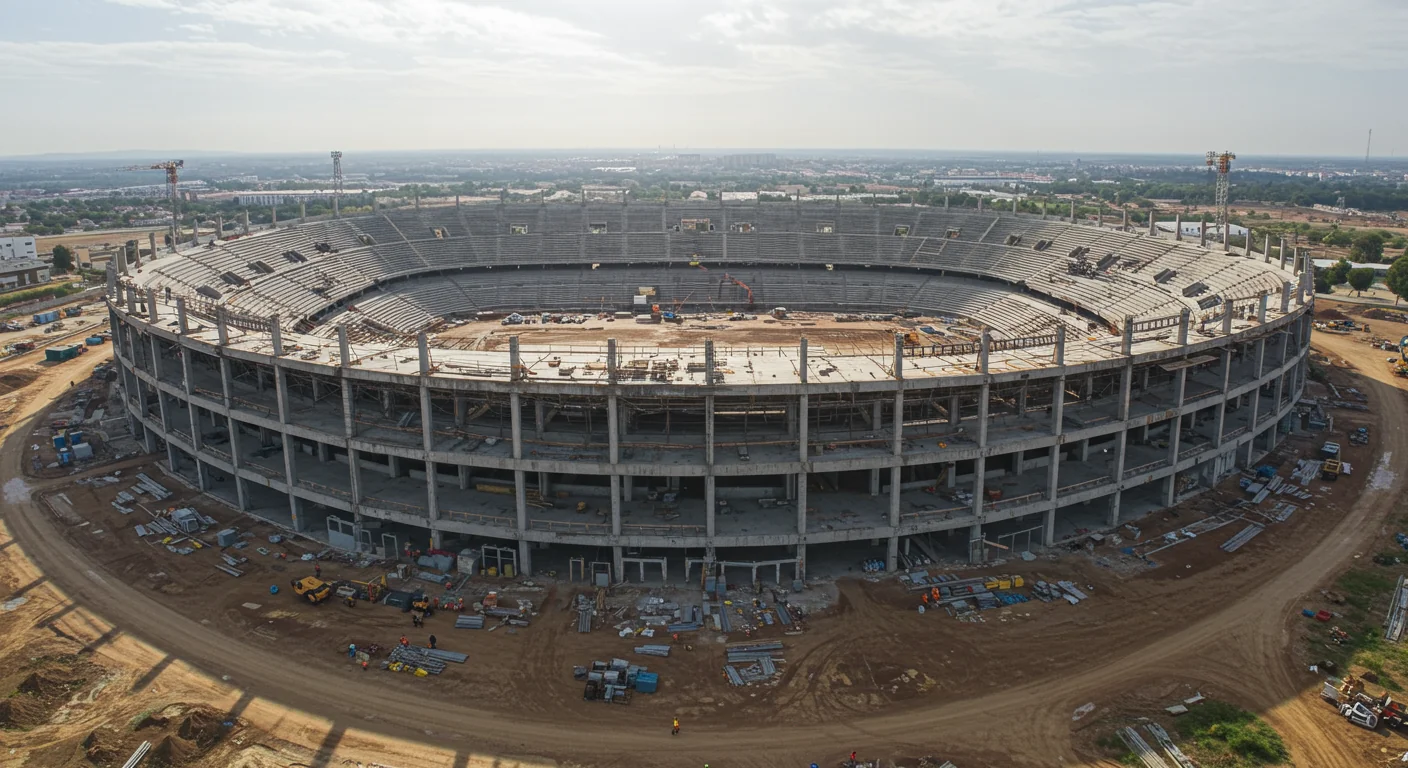
No new stadiums were built for this World Cup, a rarity for the tournament. Instead, organizers chose to retrofit existing NFL and CFL venues, a decision that created its own category of headaches.
At MetLife Stadium in New Jersey, contractors Skanska and EwingCole removed 1,740 seats to widen corner sections for a 68-meter pitch, the minimum FIFA width that American football stadiums were never designed to accommodate. Every U.S. venue must also strip artificial turf and install temporary natural grass, a process that takes weeks to establish and is vulnerable to weather.
In Toronto, PCL and Arena Group are expanding BMO Field on a budget that has ballooned from $45 million when the bid was submitted in 2018 to $380 million today. Mayor Olivia Chow has defended the spending as a long-term investment in the city's sports infrastructure, but the eightfold increase has drawn scrutiny from Toronto's auditor general.
Vancouver's BC Place carries the highest per-match cost of any venue: between $532 million and $624 million for seven matches, driven by the stadium's retractable roof complications and seismic retrofit requirements.
Mexico's Opening Night Gamble
Estadio Azteca, the only stadium in history to host three World Cup tournaments, is undergoing a $150 to $180 million renovation under owner Emilio Azcarraga Jean. The upgrade pushes capacity from 83,000 to 90,000 and modernizes facilities that date to the venue's original 1966 construction.
The stadium gets its final test on March 28 when Mexico plays Portugal in a friendly that doubles as a soft opening for the venue's new configuration. The opening ceremony follows on June 11.
BOTTOM LINE: Azteca has nine days to prove its renovation works before 80,000 fans arrive for the Portugal friendly.
Seattle's Uncomfortable Side Effect
The tournament's ripple effects extend beyond stadiums. In Seattle, Mayor Katie Wilson launched an emergency initiative to house 4,000 homeless individuals before the World Cup to protect the city's "global image." The plan includes 500 new shelter beds by May.
Critics have called it event-driven social policy, arguing that the urgency should exist regardless of FIFA's schedule. Supporters counter that the World Cup provides both funding and political will for infrastructure that outlasts the tournament.
What Happens in the Next 85 Days
The timeline from here is unforgiving. April brings the start of final overlay construction — temporary hospitality tents, media centers, and broadcast compounds at all 16 venues. In May, FIFA takes exclusive control of every stadium, locking out regular tenants including NFL teams still conducting off-season operations.
The $625 million release removed the most immediate threat, but it did not solve the underlying tension between FIFA's revenue model and the cities footing the bill. Eleven U.S. cities, three Mexican hosts, and two Canadian venues now enter a sprint that will determine whether the largest World Cup ever staged opens on time or opens with apologies.
The opening whistle at Estadio Azteca is set for June 11. Construction crews across the continent are counting the days.