Super Tuesday Results Reveal 'New Center' Surge Across US Primaries
Super Tuesday 2026 primary results show centrist challengers defeating incumbents in Texas and Illinois, signaling a populist realignment in both parties.
James Talarico, a 32-year-old Texas state representative and former seminary student, defeated U.S. Representative Jasmine Crockett to win the Democratic Senate nomination on March 3, becoming the most visible face of a political movement that strategists are calling the "New Center." His victory in Texas, paired with similar results in Illinois and Arkansas, has forced both parties to reckon with a voter base that no longer fits neatly into left or right.
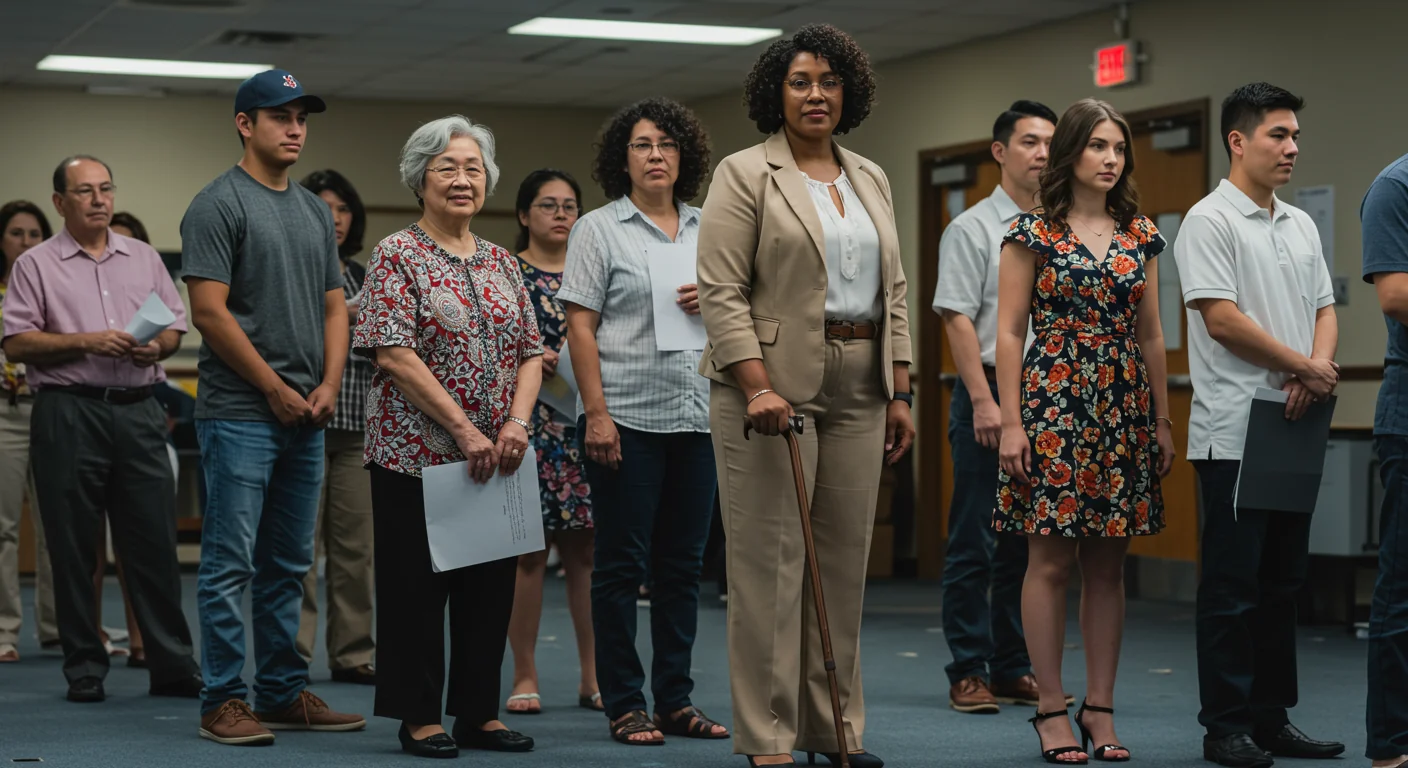
The March 3 Super Tuesday primaries drew record turnout in several states. In Hays County, Texas, 27.22 percent of registered voters cast ballots, surpassing both the 2022 and 2024 cycles. More than 400,000 Texans voted in a Democratic primary for the first time.
Background
The New Center movement traces its origins to the Democratic Party's 2024 losses. A group of strategists, led by Simon Bazelon and funded in part by Welcome PAC, concluded that progressive positions on identity, climate, and democracy had become liabilities with working-class voters of all races.
Their diagnosis arrived in October 2025 with the "Deciding to Win" report, which argued that Democrats had "badly weakened their party with left-leaning ideas" and needed to "break with unpopular party orthodoxies." The prescription was specific: support aggressive immigration enforcement and higher taxes on billionaires simultaneously. Populist economics married to cultural discipline.
Welcome PAC, co-founded by Liam Kerr and Lauren Pope, became the financial engine. FEC filings show donors like David and Patricia Nierenberg contributing $770,000 since early 2024. The group identified and backed candidates in districts that Donald Trump had carried, betting that the right messenger could flip them.
Key Details
The results on March 3 validated that bet across multiple states.
In Texas, Talarico ran on a platform that defied traditional labels. He used his seminary background to make what he called a "Biblical case" for taxing the wealthy while hammering border security and public safety. On election night in Austin, he told supporters: "They're going to call me a radical leftist, a fake Christian, because we're a threat to their corrupt system."
On the Republican side, the Texas Senate race produced its own upheaval. Incumbent Senator John Cornyn and Attorney General Ken Paxton failed to secure majorities and will face a primary runoff in May. Meanwhile, Representative Dan Crenshaw lost his House seat to right-wing challenger Steve Toth, who took 56 percent of the vote.
In Illinois, Lieutenant Governor Juliana Stratton won the Democratic Senate nomination with 39.8 percent in a five-candidate field, defeating Representative Raja Krishnamoorthi, who had left his House seat to run. Stratton adopted the same populist-centrist formula that worked for Talarico.
Arkansas delivered another signal. Democrat Alex Holladay won a special state house election with 57 percent, flipping a seat previously held by Republicans in a deep-red state.
Impact
The results have created a new fault line in Democratic politics. The old division between progressives and moderates is giving way to a fight over which kind of populism the party should embrace.
Jon Cowan, president of the centrist think tank Third Way, praised the winning candidates for combining "aggressive immigration enforcement" with "increased taxes on billionaires." But progressives reject the idea that these victories represent a move to the center. Writing in The New Republic, analysts noted that "moderate isn't what it was in 1992" and argued that Talarico won because of his populism, not despite it.
A January 2026 poll by Embold Research, surveying 2,400 frequent Democratic voters, found that even self-identified moderates favored taxing the rich and economic populism over what the pollsters called "Republican-lite" platforms. The data suggests the electorate has moved, and candidates who recognized that shift earliest gained the advantage.
Representative Jake Auchincloss of Massachusetts, who chairs the Majority Democrats PAC, has positioned himself as the congressional face of the New Center caucus. The Searchlight Institute, a newly established think tank, is providing policy frameworks for what it calls "patriotic, productive populism."
Republican strategists are already adjusting. Opposition research teams have begun mining Talarico's social media history, surfacing past clips in which he stated "God is nonbinary." The general election in Texas will test whether cultural attacks can neutralize an economic populist message.
What's Next
The Texas Republican Senate runoff between Cornyn and Paxton in May will determine whether the GOP establishment can hold its ground against its own insurgent wing. The outcome will shape the general election matchup in one of the most-watched Senate races in the country.
On Capitol Hill, campaign teams and congressional offices are being briefed on the "Deciding to Win" report as both parties recalibrate messaging for the fall. Welcome PAC has identified 15 House districts where independent-minded and Forward-Common Sense candidates have now secured ballot access.
The November 2026 midterms will be the definitive test. If Talarico can win a Senate seat in Texas and Stratton can hold Illinois, the New Center will have proven it can survive beyond a primary. If they lose, the movement may be remembered as a reaction to 2024 that burned bright and brief.
Greg Schultz, the former 2020 Biden campaign manager who collaborated on the New Center strategy, put it plainly in an interview last week: the party either adapts to the voters it has or keeps losing the ones it needs. The primaries suggest voters have already made their choice. The question is whether the parties can keep up.
Tags
Sources
- The New York Times
- Associated Press
- The New Republic
- Welcome PAC
- The Guardian
- Semafor
- TIME
- Puck News
Related Articles

Trump Orders Federal Agencies to Plan Large-Scale Staff Cuts With Musk's DOGE
Trump signed an executive order Feb. 11 requiring agencies to coordinate with Elon Musk's DOGE on workforce reductions and to hire one person for every four who leave.

Trump and Zelenskyy Clash in Oval Office as Ukraine Meeting Erupts
A Feb. 28 bilateral meeting turned into a shouting match. Trump and Vance accused Zelenskyy of disrespect; the minerals deal went unsigned and aid was suspended.

Trump Repeals EPA Climate Endangerment Finding, Unwinding Legal Base
The Trump administration has repealed the EPA endangerment finding that underpinned federal climate regulation, removing the legal basis for carbon rules.