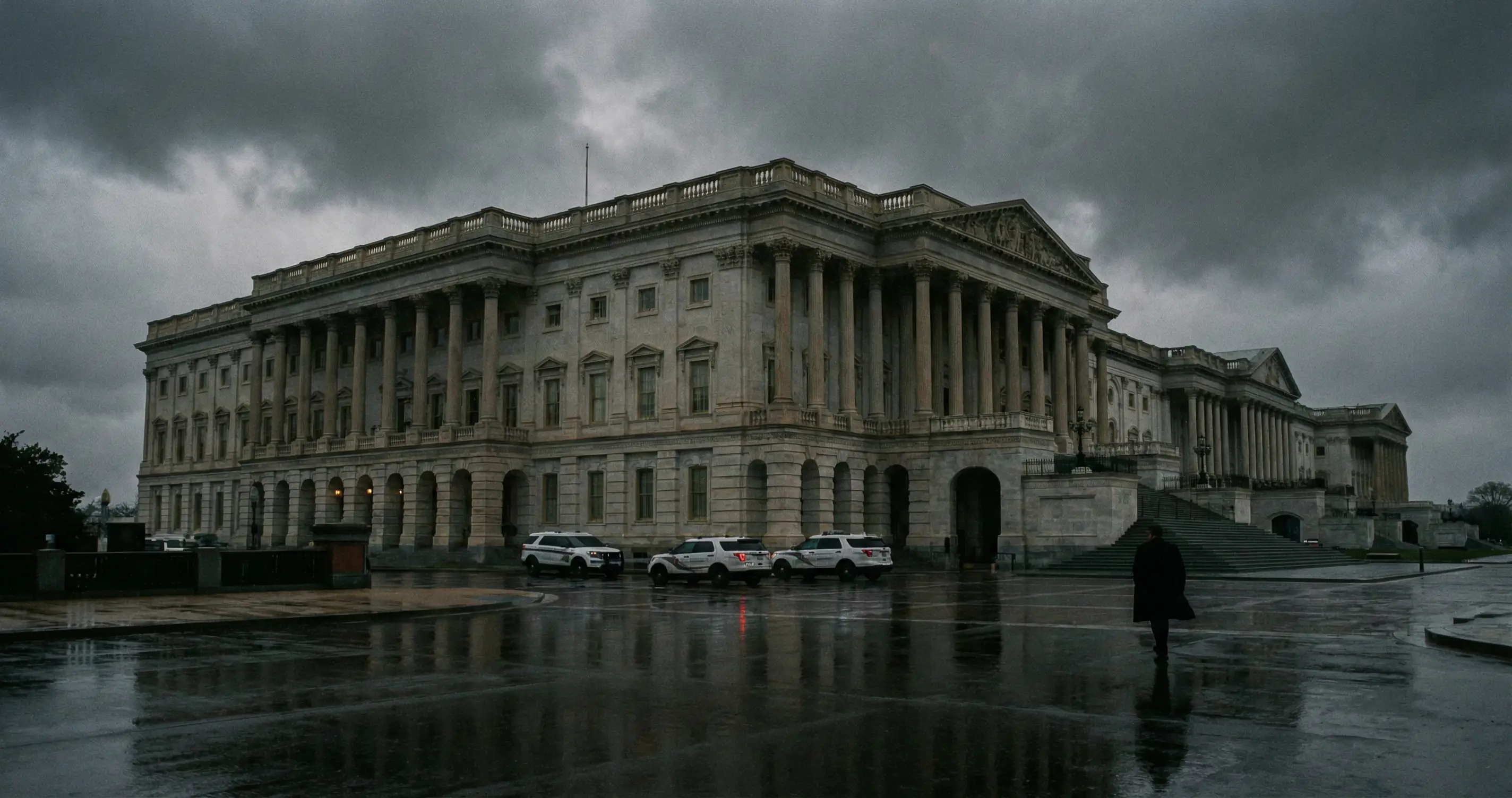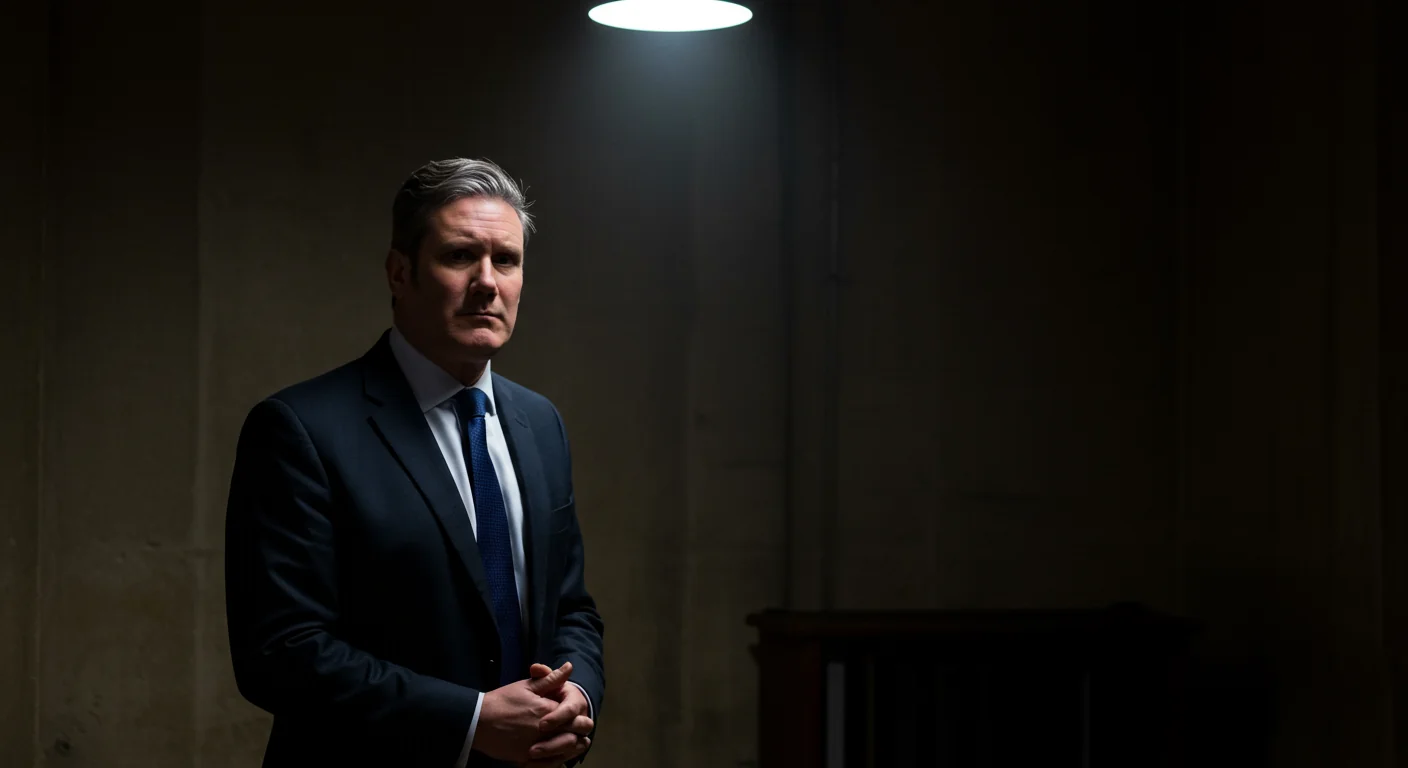
More than 40 Labour MPs from northern England and the Midlands are organizing against Prime Minister Keir Starmer's government, threatening to block key welfare legislation unless the Treasury reverses course on infrastructure spending cuts announced in the 2026 Spring Statement.
The rebellion, coordinated through the Labour Red Wall Caucus chaired by Bassetlaw MP Jo White, represents the most serious internal challenge to Starmer's leadership since Labour won its landslide in November 2024. With local elections seven weeks away and Reform UK polling ahead of Labour in several former heartland seats, the stakes extend well beyond parliamentary arithmetic.
Background
Chancellor Rachel Reeves delivered the Spring Statement on March 3, announcing an £18 billion reduction in borrowing compared to autumn projections. The same day, the Office for Budget Responsibility downgraded 2026 GDP growth to 1.1 percent, down from an earlier forecast of 1.4 percent.
Reeves framed the budget as a return to fiscal discipline. "Stability has returned," she told the Commons, warning against a repeat of the 2022 market turmoil that ended the Truss premiership. But for MPs representing constituencies with crumbling schools and understaffed hospitals, the message landed differently.
The UK tax burden reached its highest level on record in the 2025-26 fiscal year. Rebel MPs point to a £14 billion maintenance backlog across public services as evidence that austerity in all but name continues under Labour.
Key Details
The Red Wall Caucus, now numbering more than 40 MPs, has allied with the Labour Growth Group to demand three specific changes: increased capital spending outside the South East, a delay to planned reforms of Universal Credit and Personal Independence Payments, and adoption of a proportional property tax to replace Council Tax.
The PIP reforms are the sharpest point of conflict. The Universal Credit and PIP Bill introduces a new four-point eligibility system for disability benefits, scheduled for November 2026. Nottingham East MP Nadia Whittome has called the changes based on "very weak evidence." Work and Pensions Secretary Liz Kendall has defended the reforms as necessary to get more people into employment.
A parliamentary vote on the bill is expected in June. Internal whip counts suggest up to 50 Labour MPs may rebel or abstain, a number that could leave the government reliant on opposition votes to pass its own legislation.
White, the caucus chair, has been blunt about the political calculation. "We can only move on when constituents have confidence that the government has done what's needed," she said. "Otherwise Reform will do something much more extreme."
That warning carries weight. Reform UK leader Nigel Farage has made northern disillusionment with Labour his primary campaign theme ahead of the May 7 local elections. Analysis circulated among rebel MPs shows 200 Labour members hold majorities smaller than the number of PIP recipients in their constituencies.
Impact
The rebellion has consequences beyond Westminster. Analysts at Goldman Sachs and Bank of America have warned that a chaotic local election result in May could trigger capital flight and sterling volatility. The pound has already weakened against the dollar since the Spring Statement.
The OBR's downward revision of real-terms disposable household income for 2026 compounds the political problem. Voters in Red Wall seats, many of whom switched from Conservative to Labour only 16 months ago, are seeing neither the growth nor the public service improvements they were promised.
Opposition leader Kemi Badenoch has seized on the contradiction, accusing Starmer of a "race to the bottom" on welfare while failing to deliver economic expansion. The Conservatives, though still recovering from their 2024 defeat, see an opening in Labour's internal divisions.
For Starmer personally, the crisis arrives at his lowest point in office. Approval ratings have declined steadily since the autumn budget, and the prime minister's authority depends on maintaining the fragile coalition between London progressives and northern pragmatists that delivered his majority.
What's Next
Three dates will determine whether the rebellion becomes a full leadership crisis.
The May 7 local elections are the first test. Heavy losses to Reform UK and the Greens in northern councils would validate the rebels' warnings and intensify pressure on Downing Street. Westminster observers consider a leadership challenge "highly likely" by mid-2026 if results are bad enough, with Wes Streeting and Angela Rayner mentioned as potential alternatives.
The June vote on the PIP Bill is the parliamentary flashpoint. If 50 MPs follow through on threats to rebel, the government faces the humiliation of needing Conservative support to pass its own welfare reform.
Before that, speculation is growing that Reeves may delay the November implementation of PIP changes as a concession to buy peace. Such a move would calm backbenchers but risk appearing weak, an outcome the Treasury is desperate to avoid after spending months building credibility with bond markets.
The deeper question is whether Starmer can hold together a party that won power on contradictory promises: fiscal responsibility for the markets and transformative investment for the towns. Eighteen months into government, the bill for that ambiguity is coming due.