Moderna mRNA Flu Vaccine Clears FDA Hurdle, Decision Set for August
Moderna's mRNA flu vaccine mRNA-1010 wins FDA review after initial rejection, with a decision date of August 5, 2026 for potential approval.
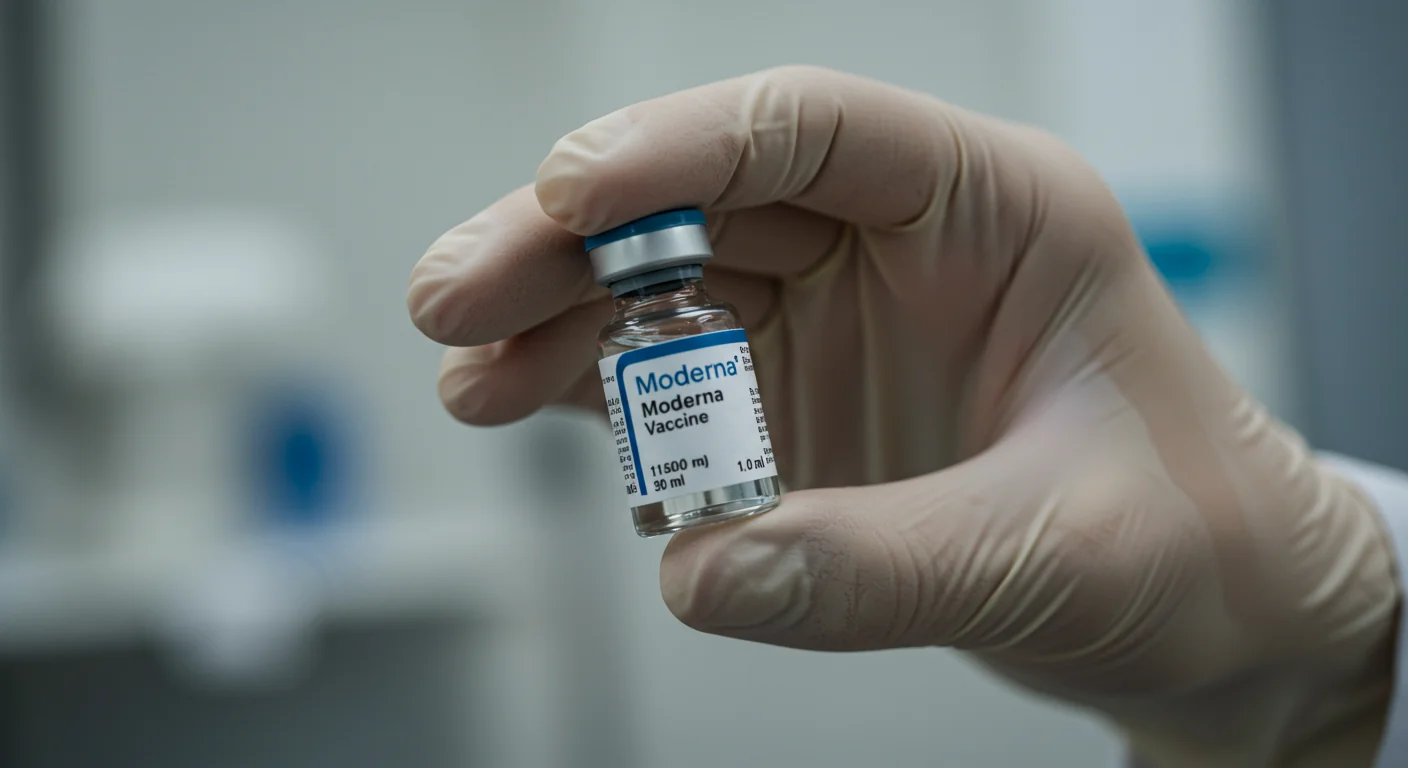
Moderna's experimental mRNA flu vaccine cleared a critical regulatory obstacle in February after the U.S. Food and Drug Administration reversed an earlier refusal to review the company's application, setting up a decision that could reshape how Americans protect themselves against seasonal influenza.
The FDA has set August 5, 2026, as the target date to rule on mRNA-1010, Moderna's first non-COVID vaccine candidate. If approved, the shot would be available for the 2026-2027 flu season and mark the first time mRNA technology has been applied to influenza prevention at commercial scale.
Background
Flu vaccines have relied on the same egg-based manufacturing process since the 1940s. Production takes six months or longer, and the virus frequently mutates during that window, leaving patients with shots that match poorly against the strains actually circulating. Efficacy in any given season hovers between 40 and 60 percent.
mRNA technology sidesteps this problem. Vaccines can be formulated in weeks rather than months, allowing manufacturers to lock in strain selection much closer to flu season. Moderna has spent four years and roughly $750 million in financing from Blackstone Life Sciences to bring mRNA-1010 through clinical development.
The path has not been smooth. An early Phase 3 study in 2023 showed strong results against influenza A strains but missed its target for influenza B, forcing Moderna to reformulate and run a new trial.
Key Details
The pivotal Phase 3 study, designated P304, enrolled 40,805 adults aged 50 and older across 11 countries. Results released on June 30, 2025, showed mRNA-1010 achieved 26.6 percent higher relative vaccine efficacy compared to a licensed standard-dose flu shot.
Breaking that down by strain: the vaccine delivered 29.6 percent better protection against A/H1N1, 22.2 percent against A/H3N2, and 29.1 percent against B/Victoria. Among adults 65 and older, overall relative efficacy was 27.4 percent.
Those numbers may sound modest in isolation. In context, they represent one of the largest efficacy gains over existing flu vaccines demonstrated in a late-stage trial. Standard flu shots prevent an estimated 100,000 hospitalizations annually in the United States. A 27 percent improvement over that baseline would translate to tens of thousands of additional prevented cases each year.
The regulatory timeline took an unexpected turn. Moderna submitted its Biologics License Application in late 2025. On February 12, 2026, the FDA issued a Refusal-to-File letter. Vinay Prasad, the agency's top vaccine official, signed the rejection. The stated reason: Moderna had compared mRNA-1010 to a standard-dose vaccine rather than a high-dose formulation like Sanofi's Fluzone HD for the 65-and-older population.
Moderna pushed back. Six days later, on February 18, the company emerged from what the industry calls a Type A meeting with a revised path forward. The FDA agreed to review the application under a split strategy: full approval for adults 50 to 64, and accelerated approval for those 65 and older with post-marketing study requirements.
Impact
The stakes extend well beyond a single vaccine. Moderna's entire commercial strategy depends on proving that mRNA can succeed outside of COVID-19. The company reported $1.94 billion in revenue for 2025, down sharply from pandemic highs, and posted a $2.4 billion net loss. Management has guided for 10 percent revenue growth in 2026, a target that hinges on new product launches.
CEO Stephane Bancel has framed mRNA-1010 as the foundation of a seasonal vaccine franchise. Success here would validate the platform and accelerate development of mRNA-1083, a combination COVID-19 and flu shot already in late-stage trials. A single annual injection covering both diseases would simplify public health campaigns and could significantly boost uptake.
Moderna also cleared a legal obstacle in March 2026, reaching a $950 million settlement with Genevant and Arbutus over the lipid nanoparticle delivery technology that underpins its mRNA platform. The deal removes a cloud of patent uncertainty that had hung over the company's pipeline.
For competitors GSK and Sanofi, whose vaccines served as the comparators in Moderna's trial, the data signals a challenge to decades of market dominance. The global flu vaccine market is valued at roughly $7 billion annually.
What's Next
The August 5 PDUFA date is the next milestone. Analysts at Leerink Partners have noted uncertainty about what the FDA will require for the post-marketing study in older adults, which could affect the breadth of the initial label.
If the agency approves, Moderna plans to launch in time for fall vaccination campaigns. The company is also pursuing regulatory submissions in the European Union, Canada, and Australia, with international revenue expected to scale by 2028.
The broader question is whether mRNA can do for flu what it did for COVID-19: compress development timelines, improve strain matching, and deliver better protection. The Phase 3 data suggests it can. The FDA's answer in August will determine how quickly that potential reaches patients.
Tags
Sources
Related Articles
CDC Finds Silent Bird Flu Infections in U.S. Dairy Veterinarians
A CDC serosurvey of 150 bovine veterinarians found three with undetected H5N1 infections. Two had no known exposure to infected herds, suggesting wider spread than official counts.

Wegovy Pill Approved as GLP-1 Supply Eases and Pricing Shifts in 2026
Novo Nordisk's oral Wegovy received FDA approval in January 2026. Supply shortages have eased while government pricing deals and weight-regain data reshape the obesity drug market.

ChatGPT Health: How 40 Million People Use AI for Healthcare Questions
OpenAI says 40 million people use ChatGPT for health-related queries. ChatGPT Health can use medical records. Here's what that means and the risks.