Semiconductor Industry Nears $1 Trillion as AI Drives Record Growth
Global chip revenue hit $791.7 billion in 2025, up 25.6%, with 2026 projected above $1 trillion. TSMC leads expansion while Intel cuts jobs and Samsung ramps 2nm production.
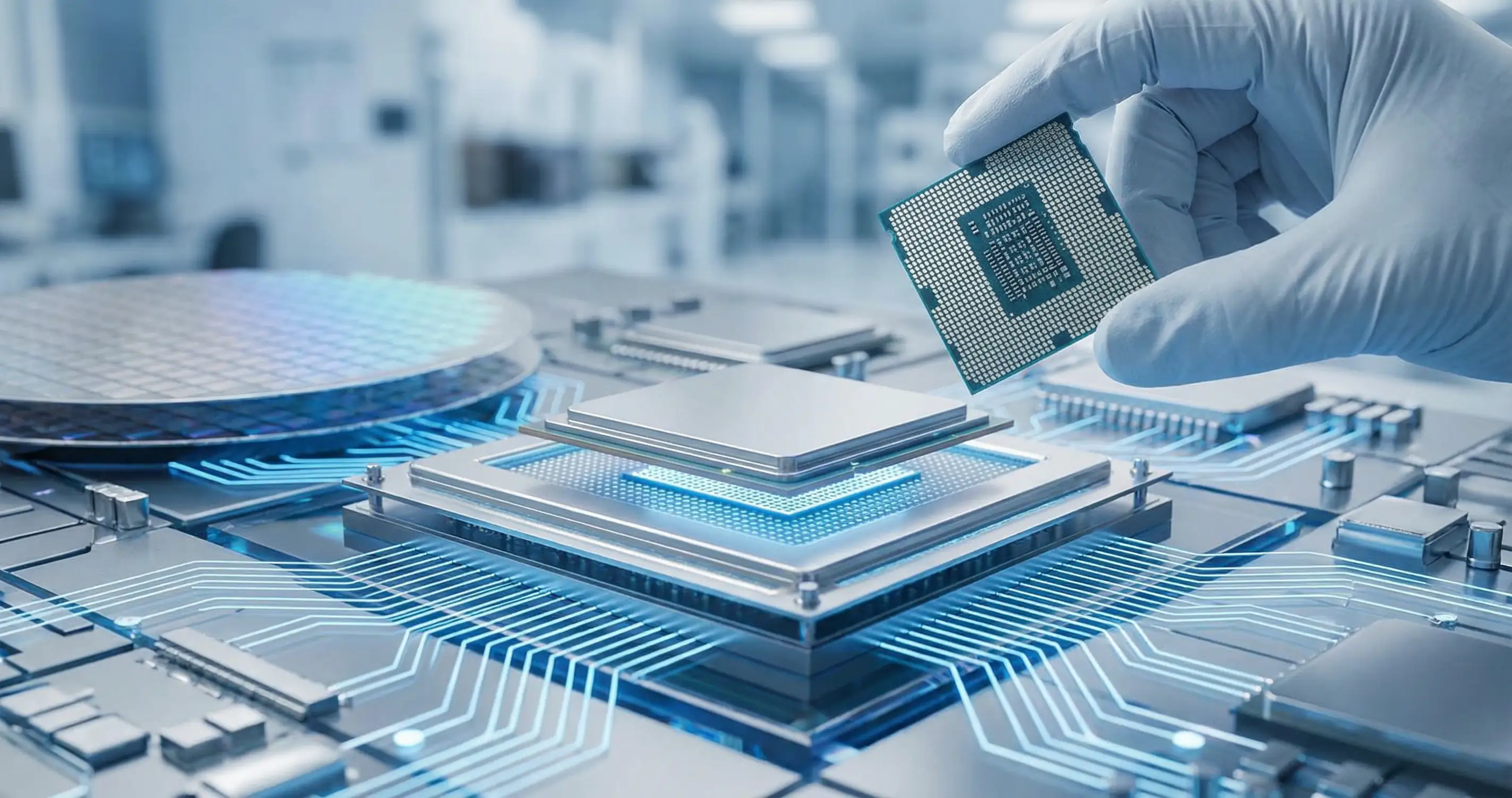
The global semiconductor industry reached record revenue of $791.7 billion in 2025, up 25.6 percent from the prior year, and is on track to exceed $1 trillion in 2026 as artificial intelligence infrastructure drives demand for advanced logic and memory. Taiwan Semiconductor Manufacturing Company is raising capital spending to as much as $56 billion in 2026 and has started volume production of 2-nanometer chips, while Intel is cutting roughly 24,000 jobs and Samsung is ramping 2nm production and preparing its $37 billion Texas fab for operations by end-2026.
Background
AI has become the main driver of semiconductor demand. Logic devices generated $301.9 billion in revenue in 2025, up 39.9 percent year-on-year, and memory contributed $223.1 billion, up 34.8 percent, with both categories heavily tied to AI applications. Deloitte has estimated that generative AI chips could account for about half of global chip sales in 2026 by value while representing less than 0.2 percent of unit volume—a concentration that has pushed manufacturers to allocate capacity and advanced packaging toward data centers and AI accelerators, tightening supply for smartphones, PCs, and other segments.
Key Details
TSMC reported full-year 2025 revenue of $122.4 billion, up 35.9 percent, with fourth-quarter revenue above guidance. The company began volume production of its N2 (2 nm) process in December 2025 at Fab 22 in Taiwan, using gate-all-around nanosheet transistors for the first time. Taiwan restricts TSMC from producing its most advanced 2 nm node outside Taiwan until it has developed still more advanced technology at home, so U.S. fabs will focus on 3 nm for now. TSMC's second Arizona fab (Fab 21 Phase 2) is due to start N3 production in 2027, ahead of the earlier 2028 target; a third Arizona fab is planned for N2 and A16. The company received $6.6 billion in U.S. CHIPS Act grants and is part of a $500 billion Taiwan–U.S. trade and investment package announced in January 2026.
Intel reported fourth-quarter 2025 revenue of $13.7 billion, down 4 percent year-on-year, and full-year revenue of $52.9 billion, flat versus 2024. Under CEO Lip-Bu Tan, Intel is eliminating about 24,000 positions, roughly 15 percent of its workforce, and cutting an additional $1.5 billion in costs through 2026. The company received $7.86 billion in CHIPS Act funding for fabs in Arizona and Ohio. Samsung, by contrast, moved into mass production of its first 2 nm process in 2025 and plans to ramp a second-generation 2 nm variant in late 2026; it secured a $16.5 billion supply deal with Tesla for AI chips. Samsung's $37 billion Taylor, Texas, factory is expected to be operational by the end of 2026.
Memory supply has tightened as producers prioritize high-bandwidth memory for AI. Some analysts project memory price increases of up to 50 percent by mid-2026. HBM commands far higher margins than commodity DRAM, encouraging suppliers to shift capacity and contributing to cost pressure for PCs and smartphones.
Impact
Geographic diversification is accelerating. The U.S. CHIPS and Science Act has committed tens of billions in manufacturing subsidies and helped trigger hundreds of billions in private investment; the U.S. is projected to triple its semiconductor manufacturing capacity from 2022 to 2032. Export controls and tariffs continue to shape trade: in January 2026 the U.S. imposed 25 percent tariffs on certain advanced logic chips while authorizing limited Nvidia H200 exports to China under modified rules. China has responded with export controls on rare earths used in chips and clean tech.
What's Next
TSMC's 2026 capex of $52–56 billion will focus largely on advanced nodes and packaging. AI infrastructure spending by large cloud and tech firms is expected to approach $650 billion in 2026, sustaining demand for leading-edge logic and memory. Intel's ability to execute on process technology and win share in data center and AI will be critical to its turnaround. Industry revenue is projected to approach $1 trillion in 2026 and could reach $2 trillion by 2036 if AI buildout continues.
Tags
Sources
- https://www.semiconductors.org
- https://www.tomshardware.com/tech-industry/semiconductors/semiconductor-industry-on-track-to-hit-usd1-trillion-in-sales-in-2026-sia-predicts-bumper-forecast-follows-usd791-7-billion-haul-for-2025
- https://www.manufacturingdive.com/news/tsmc-q4-full-year-2025-earnings-ai-taiwan/809775/
- https://en.wikipedia.org/wiki/CHIPS_and_Science_Act
Related Articles

Amazon Prime Day 2026: Predicted Dates and What to Expect
Amazon Prime Day 2026 is expected in mid-July, with Prime Big Deal Days in October. Here are predicted dates and how to plan for the sales.

Tax Day 2026: When Taxes Are Due and How to Get an Extension
The 2026 IRS filing deadline is April 15. Here's how to file on time, request an extension to October 15, and avoid penalties.

Fed Rate Cuts in 2025 and 2026: What Happened and What's Expected Next
The Fed cut rates three times in 2025. Officials now project only one cut in 2026. Here's the current outlook and what could change with inflation, jobs, and a new chair.