OPEC+ Resumes Production Unwinding With 206,000 BPD April Increase
OPEC+ agreed to resume its production cut unwinding in April 2026, adding 206,000 barrels per day after a surprise Q1 pause amid a looming global surplus.
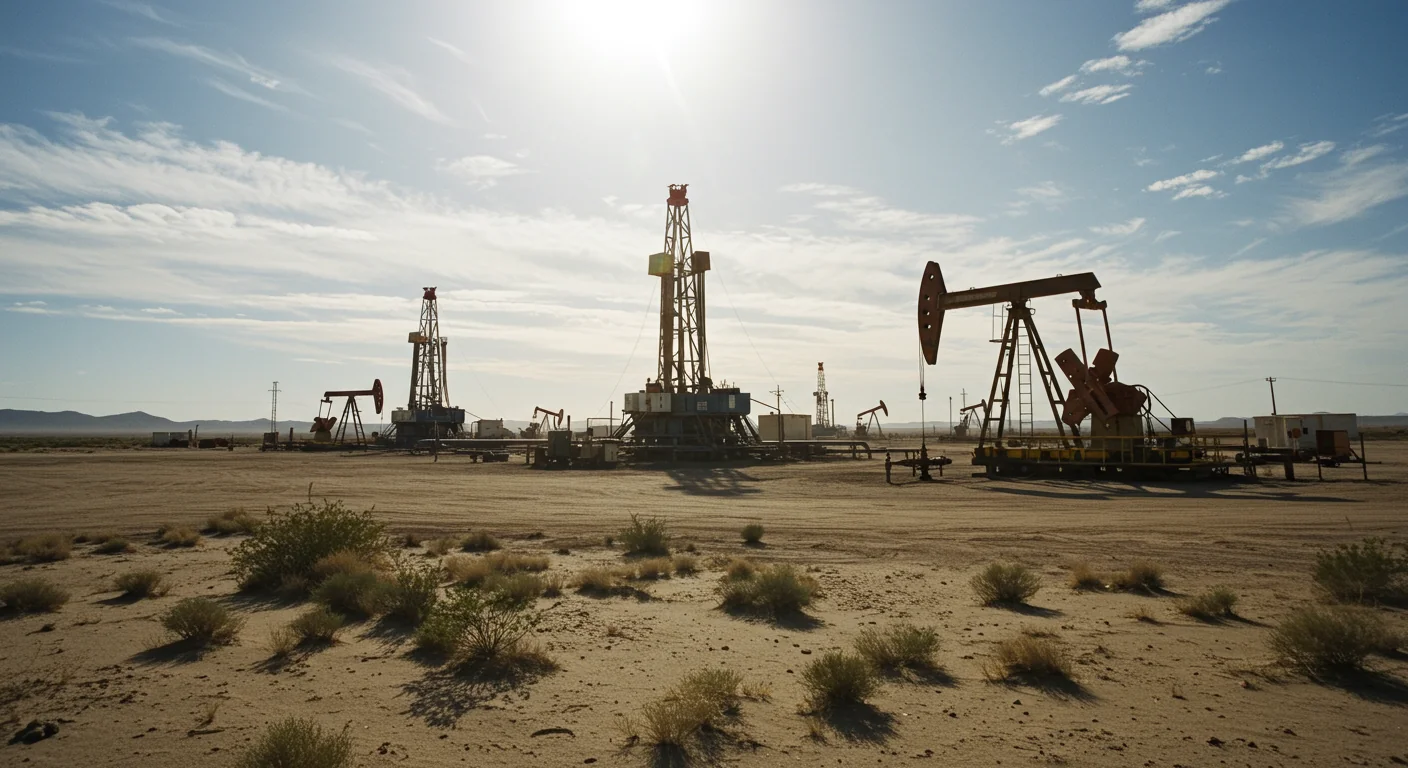
OPEC+ will begin adding 206,000 barrels per day back to the global oil market in April 2026, ending a three-month freeze on production increases that had caught traders off guard when announced in November 2025.
The decision, reached during a virtual meeting on March 1, marks the alliance's attempt to balance Saudi Arabia's need for high prices against mounting pressure from members like the United Arab Emirates, which has invested billions in idle production capacity.
Background
The 23-nation alliance has maintained roughly 5.86 million barrels per day in combined cuts since late 2022, equivalent to about 5.7 percent of global demand. Those reductions came in waves. A 2-million-barrel group-wide cut in October 2022 was followed by voluntary reductions of 1.65 million barrels in April 2023 and another 2.2 million barrels in November of that year.
Saudi Energy Minister Prince Abdulaziz bin Salman described the approach at the time as "precautionary, proactive, and preemptive." The strategy worked through much of 2024, with Brent crude trading above $90 a barrel.
But the price environment shifted. By early 2026, Brent had fallen to between $64 and $72, well below the roughly $81 Saudi Arabia needs to balance its national budget and fund Crown Prince Mohammed bin Salman's Vision 2030 projects, including the $500-billion NEOM development.
Key Details
The April increase of 206,000 barrels per day is modest by design. OPEC+ will conduct monthly reviews before authorizing further additions, a mechanism that gives Prince Abdulaziz bin Salman an effective veto if prices weaken further.
The initial unwinding targets the 1.65-million-barrel voluntary layer first introduced in April 2023. At the current pace, full restoration of that production tier would take roughly eight months, assuming no interruptions.
Russia, the alliance's second-largest producer, faces particular scrutiny. Deputy Prime Minister Alexander Novak has emphasized a "trust but verify" approach to compliance, though Moscow has drawn repeated criticism for exceeding its quota as it seeks revenue for the war in Ukraine.
The UAE presents a different challenge. Abu Dhabi has pushed to raise its production baseline to reflect roughly $150 billion in upstream investments aimed at reaching 5 million barrels per day by 2027. Under the current quota system, much of that capacity sits unused, a source of growing friction within the alliance.
Impact
The International Energy Agency forecasts a record surplus in 2026, with supply potentially exceeding demand by as much as 4.1 million barrels per day. That estimate factors in continued growth from non-OPEC producers, particularly the United States, where output has reached approximately 13.4 million barrels per day, along with rising volumes from Brazil and Guyana.
For consumers, the surplus should keep fuel prices relatively contained. For producers, particularly those in the Middle East and Africa that depend heavily on oil revenue, the math is punishing. At current Brent levels, Saudi Arabia faces a fiscal deficit that could force difficult choices between domestic spending commitments and market-share defense.
Analyst Amrita Sen of Energy Aspects noted that the cuts were designed to "allay market fears" of a glut. Jim Burkhard of S&P Global offered a blunter assessment: supply growth is outpacing demand growth regardless of OPEC+ discipline.
The Trump administration has added another variable. After the Biden White House labeled earlier cuts "unwise" and "shortsighted," the current administration has used tariffs as a counter-lever, pressuring the alliance through trade policy rather than direct diplomacy.
What's Next
OPEC+ is building toward a structural overhaul scheduled for 2027. The alliance plans to transition from its current quota system to one based on independently verified production capacity. Audits of each member's maximum sustainable capacity are underway and will run through September 2026.
The new framework is meant to resolve the internal disputes that have plagued the group, particularly the UAE's demands for a higher baseline. Whether it succeeds depends on members accepting assessments that may not match their own calculations.
In the near term, the alliance faces a narrow path. Adding supply too quickly risks accelerating the price decline that has already cut Brent by more than 20 percent from its 2024 highs. Moving too slowly risks losing market share permanently to American shale producers, who have shown they can ramp output faster than any OPEC+ member.
The April increase will be the first real test of whether OPEC+ can manage an orderly retreat from the deepest production cuts in its history. Monthly reviews give the group flexibility, but flexibility only matters if the 23 members can agree on what the data is telling them.
For global markets, the signal is clear enough. The era of OPEC+ holding back nearly 6 million barrels a day is ending. The question is how fast, and at what price.
Tags
Sources
- https://vertexaisearch.cloud.google.com/grounding-api-redirect/AUZIYQH0idjYF1jUqUAdloJLr1byR5aTLuK1BV2WE3YqIBqWAQcehVGbtnaX1dOt1L1P803xx5IxXu0DjSlaSPIaLniEwVC1Fv1FHfZMHS-SjJmUH7RGvh-YVFutKZ0wM9coN3TVtt490bUIsV63DIIlqDJ8Kj9bIxJHzalteOhcONH2iHA4get0yXRhdy5c2hDZja6JG6AtAXVUm8nO2WFhnABTBW0mOA==
- https://vertexaisearch.cloud.google.com/grounding-api-redirect/AUZIYQHC0yCA_a0Yh9-6Pa-7z-IzyHLmdXewTjmWUyiLtkz1BwhMcuug4PMfJB6HiPreeJRtpp9ui-NmEbbayLl8RJL4Ywgtia8mOtlyCydKgOO6csNEzh5A7hcF_TeSH99wJUO7f-w9qhVCKBwnS0UcWwgWHIKa6XSUBkcoAko0TjsgMiaQSKcX-FpbjIyTtltCSMwVq0xBOypNUmoFABUyENnecQ==
- https://vertexaisearch.cloud.google.com/grounding-api-redirect/AUZIYQFOcak9_tEAKDIFrdr6PgHVauNzaJ8qdNbV_kW5CYmCFa8o2aJk3JC-9znMSsHa3ASgbayru7iiCEnCumCbtMvPAQXvkhhspqfmkwMZFO57d3l4dybUXUrvsA4n-cqHnAb4uyriQumP_u1iHh-HpEk4WYoo3yPu69PNVEdB4JO0XnF5ImHEwHd-6Nk2fmVv80jx4Afchl5482_ROe8nh0uiH-H7tecyWkTuez-kznaI8KQbhPDU
- https://vertexaisearch.cloud.google.com/grounding-api-redirect/AUZIYQFecCTTJKLwPxHAkt8dvKVOpCNR2J16RJD07p2r2peRtmjvuHk0vg7SjT7oXdBc5IXU01n9FMzRnxOwY2nYeAv3w40UxQBXUY8tRgPt6f1FT34kqkQ6obFeZoaL0RAv5yIRP-Sk16_b02qtavl8pG4ITBWR_JTX-Chf3g==
- https://vertexaisearch.cloud.google.com/grounding-api-redirect/AUZIYQFHr6hpsynkvvoSLA9uCYNBqfE2V3fqCgS_glgJKBDfTEukZKhxdwXznC4E-jEx8OQtsh0kP9e20p_BcHUak_IpmjZNiVpO5ZO40xA_8G8XpLB_AEv0dl9T284BRd99cgC0Z8SRKZCbCAOMd3fmtxOLsbkLHFE45Y-jIBm7E_8BD1W67fwmheKYwt34VcE=
Related Articles

Tesla Stock and EV Sales 2026: Robotaxi Hopes vs Declining Deliveries
Tesla EV sales are set to return to growth in 2026 after a 2025 dip. The stock trades near $400 on robotaxi optimism while analysts flag overvaluation.

Semiconductor Industry Nears $1 Trillion as AI Drives Record Growth
Global chip revenue hit $791.7 billion in 2025, up 25.6%, with 2026 projected above $1 trillion. TSMC leads expansion while Intel cuts jobs and Samsung ramps 2nm production.

Amazon Prime Day 2026: Predicted Dates and What to Expect
Amazon Prime Day 2026 is expected in mid-July, with Prime Big Deal Days in October. Here are predicted dates and how to plan for the sales.